How AI Search Is Changing SEO in Singapore: New Search Era
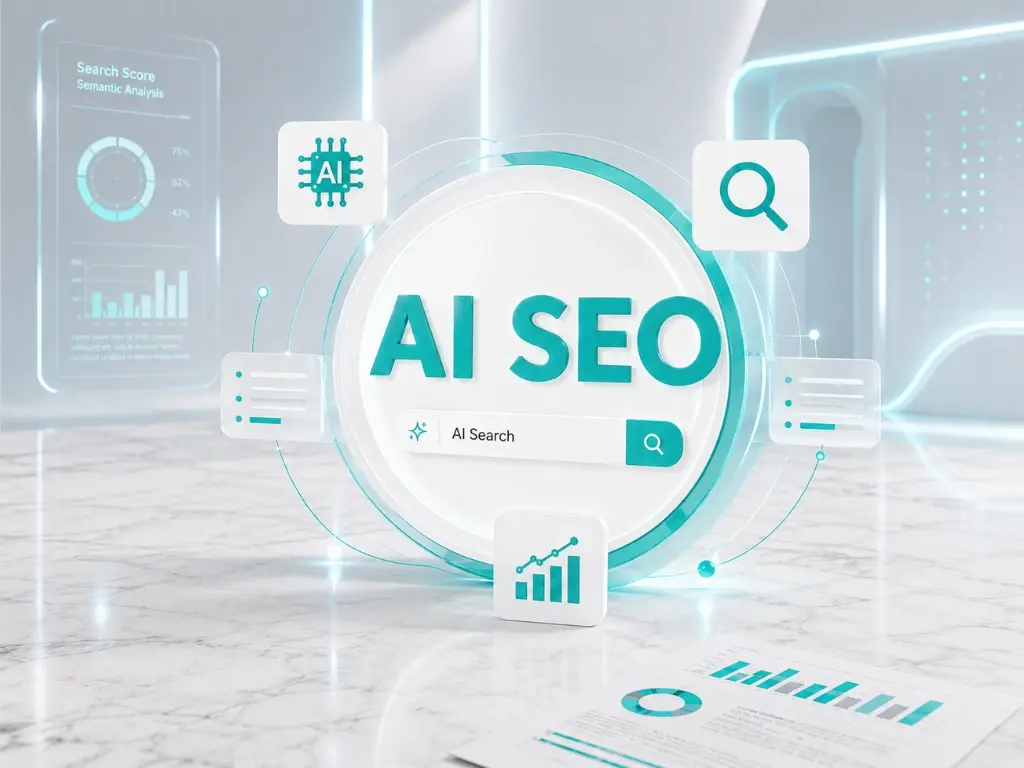
Traditional SEO Is No Longer Enough
If your current marketing agency is still bragging about getting your website onto “Page 1 of Google” using basic keywords, they are optimising for yesterday’s internet.
Today, Google AI Overviews, SearchGPT, Gemini and Perplexity are increasingly answering user queries directly on the screen before users even click into a website.

Today, businesses need to be found not only on Google search results, but also within the AI answers that influence user decisions.
This means businesses are no longer competing only for blue link rankings. They are now competing to become part of the AI-generated answer itself.
If your business is not being cited, referenced or recommended inside AI search responses, your organic visibility may gradually decline as search behaviour changes.
For many businesses in Singapore, this shift is already affecting how users discover services, compare providers and make buying decisions online.
What Is Changing in Search?
Traditional SEO focused heavily on improving keyword rankings and driving users to click into a website.
AI-powered search engines no longer process content the same way traditional search engines do. This changes how businesses need to create content around real user search queries, not just broad keywords.
Instead of showing only a list of websites, AI engines now summarise information from multiple sources and provide users with a consolidated answer immediately.
This creates a major shift in how businesses need to structure content, build online authority and measure SEO results. Businesses now need to consider not only whether they rank, but also whether their content is clear, trusted and easy for AI systems to retrieve.
Traditional SEO vs Generative Engine Optimisation (GEO)
Generative Engine Optimisation (GEO) focuses on helping AI engines understand, trust and retrieve your content accurately.
It does not replace technical SEO, link building or traditional SEO foundations. Instead, it expands SEO by placing more focus on structured content, entity signals, topical authority and AI retrieval patterns.
This is important because AI engines need clear signals to decide whether a piece of content is relevant, reliable and suitable to be included in an AI-generated answer.
This means businesses need content that is not only written for rankings, but also organised in a way that AI systems can extract, summarise and reference with confidence.
For example, content should answer specific questions clearly, use proper headings, provide useful explanations and connect related topics across the website.
This is becoming increasingly important as AI-driven search experiences continue expanding across Google, ChatGPT, Gemini and Perplexity.
Why AI Search Matters for Businesses in Singapore
Singapore businesses operate in a highly competitive digital environment where visibility directly affects lead generation and growth.
As AI search becomes more common, businesses that adapt earlier may gain stronger visibility advantages while competitors continue relying only on traditional SEO methods.
This is especially relevant for competitive industries such as real estate, renovation, finance, healthcare and B2B services.
AI-generated answers also reduce the number of casual clicks because users can receive basic information instantly without visiting multiple websites. Stronger AI search visibility can support better lead quality, long-term traffic growth and stronger brand trust.
However, the users who do click through are often more qualified because they are already deeper into the decision-making process.
When an AI engine references your business as a solution to a problem, trust is partially established before the user even visits your website.
This can improve lead quality and conversion potential, especially for B2B services and high-value enquiries.
3 Things Businesses Must Do to Improve AI Search Visibility
Clear Content Structure

Topical Authority

AI Retrieval Signals
1. Structure Content for AI Retrieval
AI engines process information differently from humans.
They scan and extract facts, definitions, lists and structured explanations from webpages. This is why your website should act like a clear knowledge base that helps AI systems understand your services, expertise and answers.
Large blocks of generic marketing paragraphs are harder for AI systems to understand and retrieve accurately. Clear structure makes your content easier for both users and AI-powered search engines to process.
Weak Example
“We are a leading company in Singapore providing excellent services for many years.”
Better Example
“Our commercial engineering services in Singapore include:
- Electrical rewiring
- Plumbing services
- Structural retrofitting
- Preventive maintenance”
Clear headings, concise explanations, bullet points and direct answers improve the likelihood of your content being referenced inside AI-generated responses.
Structured formatting also improves readability for users and search engines at the same time. It helps users scan information faster, while giving AI-powered search engines clearer signals on what each section is about.
This is especially useful for service pages, blog articles, FAQs, comparison tables and step-by-step guides, where information needs to be easy to extract and summarise.
2. Strengthen Brand Mentions Across the Web
AI engines look beyond your website when deciding whether your brand is credible, relevant and worth recommending.
They also evaluate how consistently your business appears across external platforms, trusted sources and industry references.
Consistent business information, repeated brand mentions, case studies and client results can support stronger entity authority across the web.
When these signals are aligned, AI systems can better associate your brand with the right service category, location and expertise.
This includes:
- Business directories
- Media mentions
- Guest articles
- Press releases
- Industry platforms
- Google Business Profile
Consistent business information and repeated brand mentions help strengthen your entity authority across the web. This can be further supported by case studies, client results and external mentions on trusted platforms.
For example, if multiple trusted platforms consistently mention your business as a digital marketing agency in Singapore, AI systems gain stronger confidence in associating your brand with that service category.
This becomes increasingly important for businesses competing in high-trust industries or B2B sectors.
3. Implement Advanced Structured Data
Many businesses focus on what users can see, such as service pages, blog content and landing page copy.
However, AI-powered search engines also rely on technical structured data to understand your business more accurately.
This is where schema markup becomes important. It helps search engines and AI crawlers identify who your business is, what services you provide, where you operate and how your content should be interpreted.
Schema Markup helps search engines and AI crawlers understand:
- who your business is
- what services you provide
- where your office is located
- operating hours
- FAQs
- reviews
- contact information
Important schema types may include:
- Organization Schema
- LocalBusiness Schema
- FAQPage Schema
- Service Schema
Without proper structured data implementation, AI engines may struggle to interpret your business information accurately.
Structured schema also improves your chances of appearing in rich results, featured snippets and AI-generated summaries.
AI Search Is Changing How SEO Performance Is Measured
Traditional SEO metrics focused heavily on:
- rankings
- impressions
- clicks
- organic traffic
While these metrics still matter, AI-driven search introduces additional visibility layers.
Businesses now also need to consider:
- AI citation visibility
- entity authority
- topical depth
- content extractability
- semantic relevance
A website ranking on Google may still lose traffic if users receive complete answers directly from AI-generated summaries without clicking through.
This is why modern SEO strategies now focus on both search rankings and AI search visibility simultaneously.
How AI Search Is Changing SEO Singapore Strategies
AI-driven search is changing how businesses approach SEO Singapore strategies, marketing strategies and digital marketing visibility across search engines like Google.
This is why AI integration is becoming an important part of modern SEO planning and digital marketing strategies.
Traditional SEO focused mainly on keyword research, rankings and website traffic. Today, businesses also need content that AI-powered search engines can easily understand, retrieve and reference inside AI-generated responses.
This means SEO agencies can no longer rely only on basic rankings or keyword placement. Modern SEO strategies now combine:
- technical SEO
- local SEO
- structured content formatting
- entity optimisation
- topical authority
- conversion-focused content
- high quality information architecture
to improve both traditional search engine visibility and AI search visibility.
For many businesses in Singapore, SEO now works alongside other digital marketing channels such as Google Ads and social media marketing. While paid advertising can generate immediate traffic, SEO supports stronger long-term visibility and sustainable lead generation.
Search engines like Google are increasingly prioritising content that is:
- clearly structured
- easy to extract
- factually relevant
- semantically connected
- useful for direct answers
This is why businesses should move beyond outdated SEO practices focused only on keyword density.
A stronger AI-ready SEO strategy should include:
- keyword research based on actual search intent
- technical SEO improvements for crawlability
- local SEO signals for Singapore-based searches
- high quality service pages and blog content
- structured schema markup
- brand mentions across trusted platforms
- digital marketing content that answers user questions directly
Businesses that adapt earlier may build stronger long-term authority as AI-powered search continues evolving across Google, ChatGPT, Gemini and Perplexity.
Why AI Visibility Can Improve Lead Quality
AI-generated search may reduce overall traffic volume for some industries because users can get quick answers directly from search results.
However, users who continue clicking through are often more informed, more intentional and closer to conversion.
This means AI search visibility should not only be measured by traffic growth. It should also be measured by the quality of users who visit your website after seeing your brand referenced in AI-generated answers.
When AI systems reference your company as a recommended solution, users may already perceive your business as credible before visiting your website.
For B2B businesses in Singapore, this can lead to:
- higher-quality enquiries
- stronger trust signals
- shorter sales conversations
- improved conversion efficiency
In many cases, quality becomes more important than raw traffic volume.
Businesses That Adapt Earlier May Gain Stronger Visibility
For modern SEO companies, this creates a need to look beyond rankings and consider how AI search retrieves, summarises and recommends business information.
However, search behaviour is evolving rapidly with AI-generated responses becoming increasingly integrated into search experiences.
Businesses that adapt earlier may build stronger authority while competitors continue relying on outdated SEO approaches.
Key Areas We Optimise For AI Visibility
- Improving structured content
- Building topical authority
- Strengthening brand mentions
- Implementing advanced schema
- Optimising for AI retrieval patterns
The businesses that prepare earlier are more likely to remain visible as AI-driven search continues expanding.
Is Your Website Ready for AI Search?
Modern SEO is no longer only about search rankings. It is about building enough trust, structure and authority for AI engines to retrieve, summarise and recommend your brand with confidence.
At Nex7gen Digital, we focus on modern SEO strategies designed for the evolving AI-driven search landscape, helping businesses improve visibility across both Google search results and AI-generated answers.
This includes:
- AI search visibility optimisation
- structured content strategy
- topical authority development
- technical SEO improvements
- entity-based optimisation
- conversion-focused SEO planning
Large legacy agencies often focus heavily on rigid SEO packages and vanity ranking metrics. Modern SEO requires businesses to adapt to how AI-driven search engines retrieve and recommend information.
Businesses that prepare earlier may gain stronger long-term visibility as AI-powered search continues evolving.
Frequently Asked Questions
What is AI search visibility?
AI search visibility refers to how easily AI-powered search engines can retrieve, understand and reference your business information inside AI-generated responses.
What is Generative Engine Optimisation (GEO)?
Generative Engine Optimisation (GEO) is the process of optimising content and website structure to improve visibility within AI-generated search responses.
Does AI search replace traditional SEO?
No. Traditional SEO still matters, but businesses increasingly need to optimise for both search rankings and AI-generated search experiences.
Why are AI Overviews important?
AI Overviews appear directly within search results and may influence user decisions before users visit websites.
Can structured content improve AI visibility?
Yes. Clear formatting, direct answers, schema markup and strong topical relevance help AI systems understand and retrieve content more effectively.
Quick Difference
Traditional SEO
Helps your website rank on Google.
AI-Ready SEO
Helps your content get retrieved, summarised and recommended by AI engines.
GEO
Connects both through structure, authority, schema and content clarity.